

In Vietnam, most fly ash is currently recovered directly from coal-fired power plants. The quality of fly ash depends significantly on the coal source, combustion technology, and operating conditions of each power plant. As a result, the quality of fly ash may vary considerably between different sources, and many sources may not fully meet the stringent requirements of the US standard ASTM C618.
The First Challenge: Loss on Ignition (LOI)
LOI (Loss on Ignition) is one of the most important parameters for assessing fly ash quality. The LOI value depends significantly on the coal source, as well as the combustion technology and operating efficiency of the boiler system at each coal-fired power plant.
Under Vietnamese standards, fly ash is permitted to have an LOI of up to less than 12%. This limit reflects, to a certain extent, the actual conditions of Vietnam’s coal-fired power sector, while also accommodating the diversity of more than 30 coal-fired power plants currently in operation, employing different generations of combustion technologies.
However, the higher the LOI, the greater the negative impact on the concrete production process.
The high content of unburned carbon in fly ash can adsorb chemical admixtures, particularly superplasticizers and air-entraining agents (AEA). This increases admixture demand, resulting in higher concrete mix costs and making concrete quality control more challenging.
In particular, unburned carbon can adsorb AEA, reducing the amount of air entrained in the concrete. For concrete mixes requiring an air content of approximately 5–7%, this may require producers to continuously adjust the admixture dosage to maintain the designed air content.
This is why manufacturers of precast concrete, pavement and bridge concrete, and high-performance ready-mixed concrete typically require fly ash with LOI <2%. The objective is not merely to meet applicable standards, but more importantly to ensure mix design consistency, efficient use of chemical admixtures, and consistent concrete quality across production batches.
The Second Challenge: Fineness – Residue on 45 µm
Another important parameter of fly ash quality is its fineness, which is commonly evaluated based on the residue retained on the 45 µm sieve.
Before being fed into the boiler, coal is typically pulverized and prepared to a very fine particle size, with the majority of particles being below approximately 75 µm. Pulverizing the coal helps improve combustion efficiency and maintain the effectiveness of the combustion process. However, the particle size and characteristics of the resulting fly ash still depend on the coal source, pulverization technology, and boiler technology used at each coal-fired power plant.
According to ASTM C618, the residue retained on the 45 µm sieve is specified at no more than 34%, while Vietnamese standards set a stricter limit of no more than 25%. These limits are established to accommodate the majority of fly ash sources currently produced in Vietnam.
However, the lower the residue retained on the 45 µm sieve, the finer the fly ash, which can provide significant benefits to concrete performance.
Finer fly ash particles have a larger specific surface area, thereby enhancing their ability to participate in the pozzolanic reaction with the products of cement hydration. Fly ash reacts with the calcium hydroxide (CH) generated during the hydration process, contributing to the formation of additional C-S-H (calcium silicate hydrate) binding products.
This process helps to:
- Increase concrete strength, particularly at later ages;
- Improve the density and compactness of the concrete structure;
- Reduce porosity and permeability;
- Enhance long-term durability;
- Improve workability and finishing performance of concrete.
However, one important characteristic to note is that conventional fly ash tends to reduce the early-age strength of concrete, particularly at R3 and R7, due to the slower rate of the pozzolanic reaction compared with the hydration of Portland cement.
At R28 and later ages, the contribution of fly ash becomes more pronounced and can significantly improve the strength and durability of concrete.
Hoang Son Ultra Fine Fly Ash – Addressing Two Core Challenges
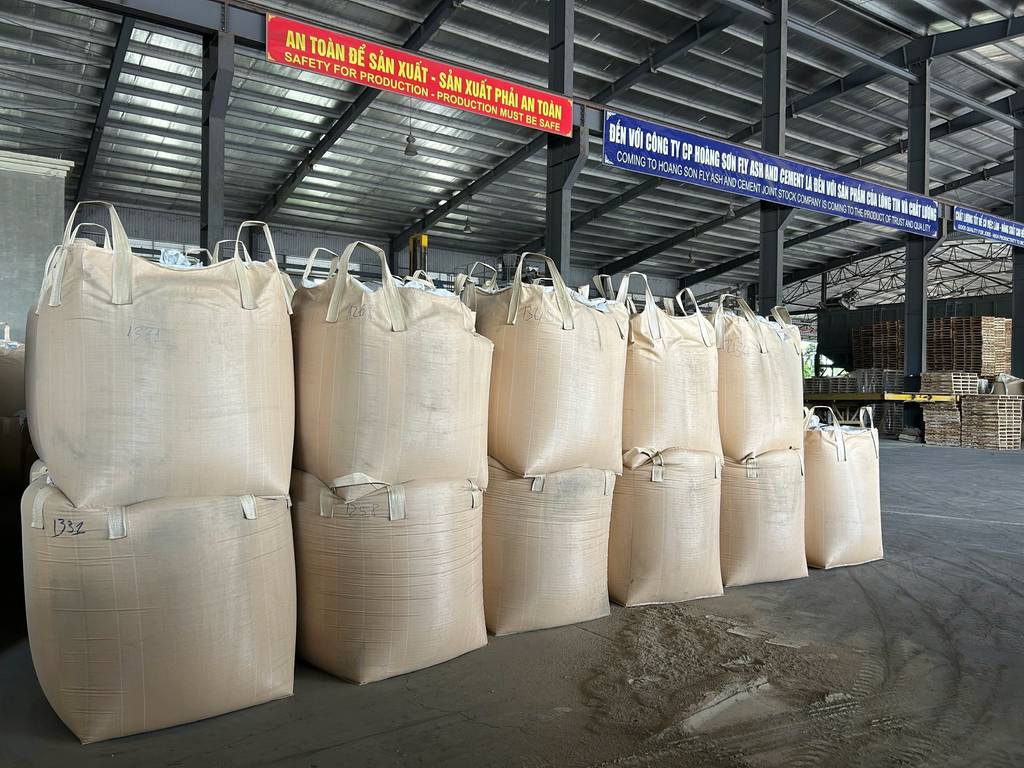
Building on the limitations of conventional fly ash, Hoang Son Ultra Fine Fly Ash was developed with the objective of addressing two of the most critical quality parameters: LOI and fineness.
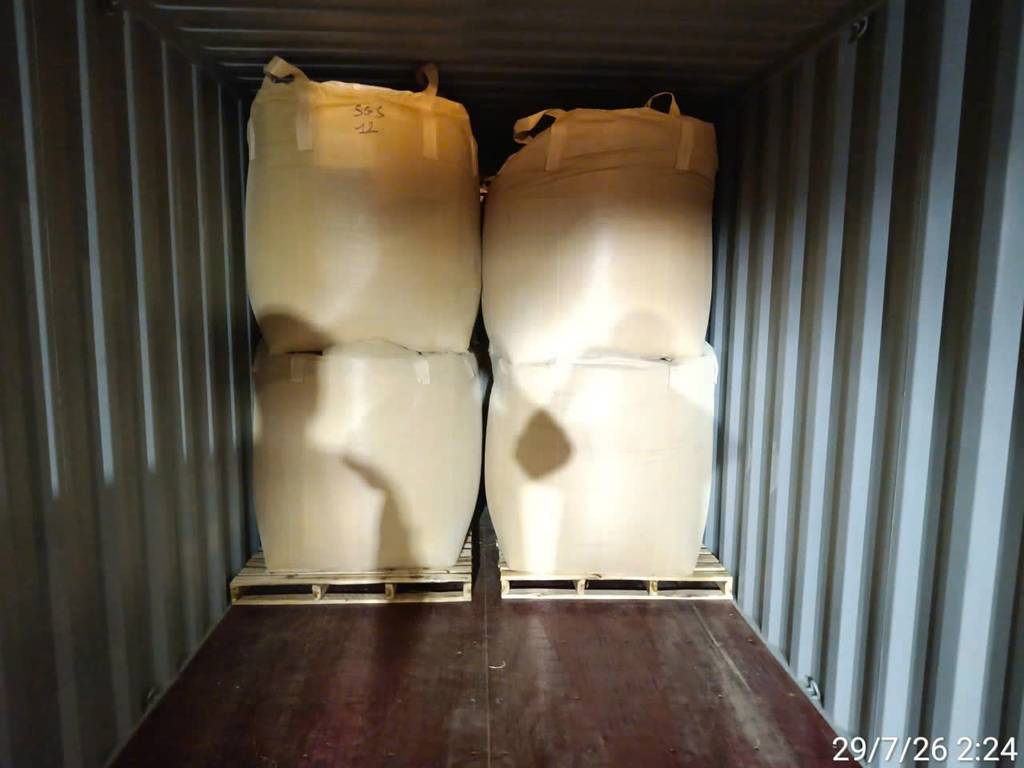
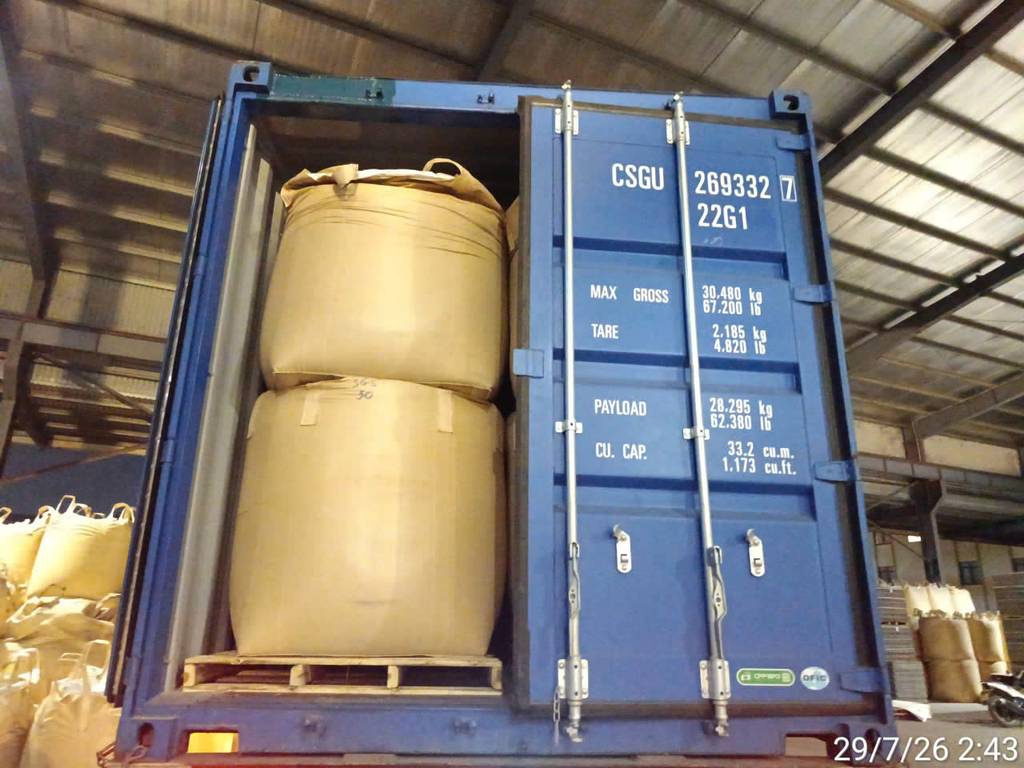
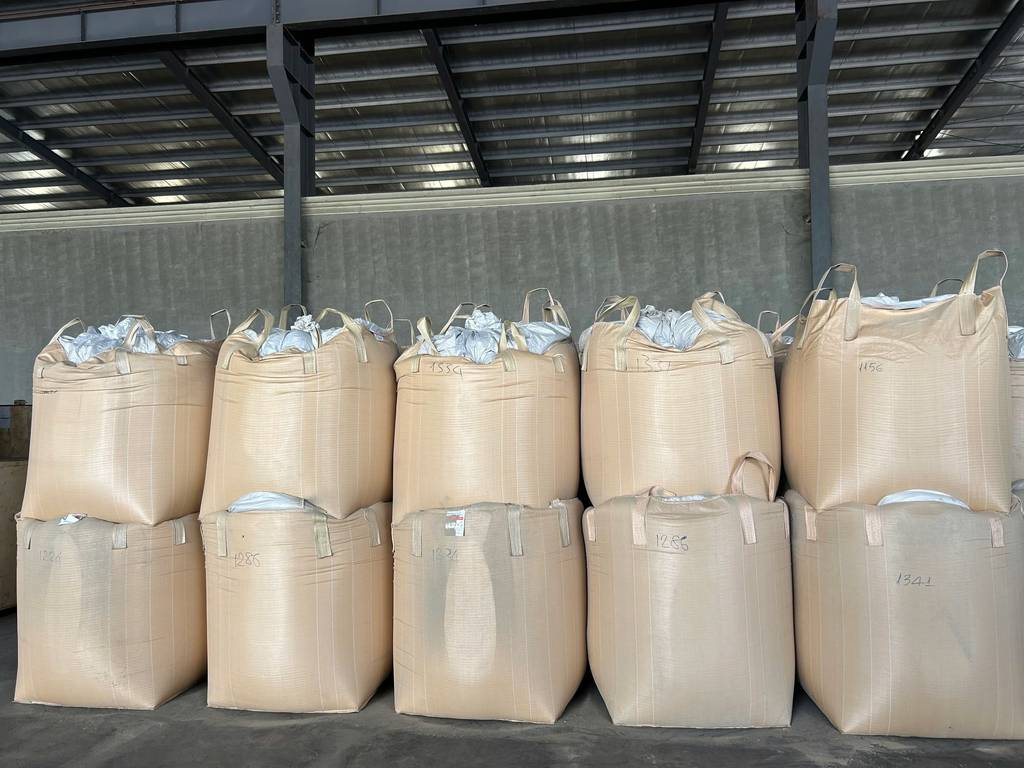
Effective control of these two parameters enables the product to deliver practical benefits:
Low LOI
→ Reduced adsorption of chemical admixtures
→ Greater mix design consistency
→ Reduced need for adjustment of superplasticizer and AEA dosage
→ Improved control of concrete quality
High Fineness – Low Residue on 45 µm
→ Increased reactive surface area
→ Enhanced pozzolanic activity
→ Improved concrete strength
→ Greater concrete density and long-term durability